


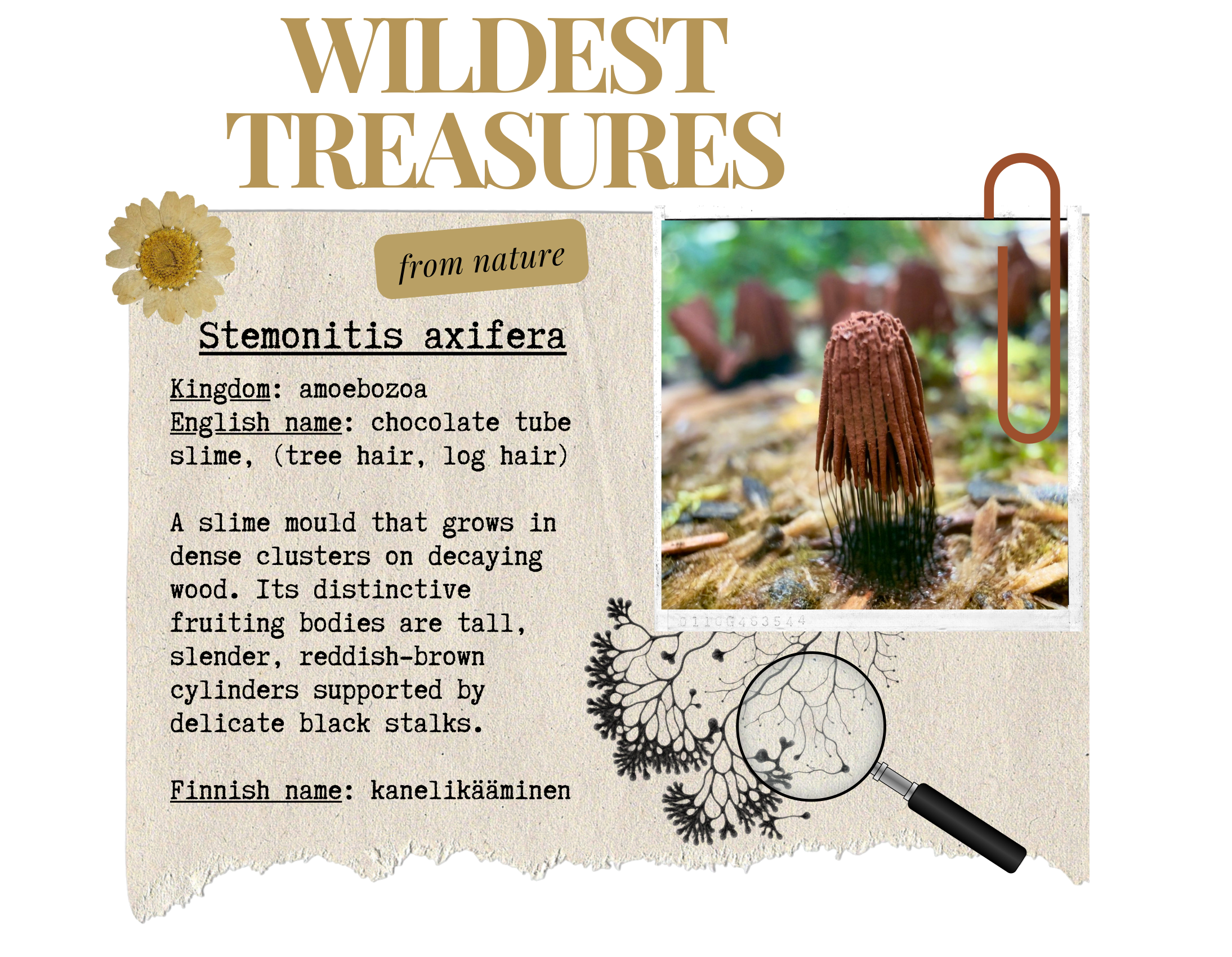
Sometimes nature creates something so extraordinary that it is hard to believe it can produce such things. One good example is slime moulds, and this is one of those species.
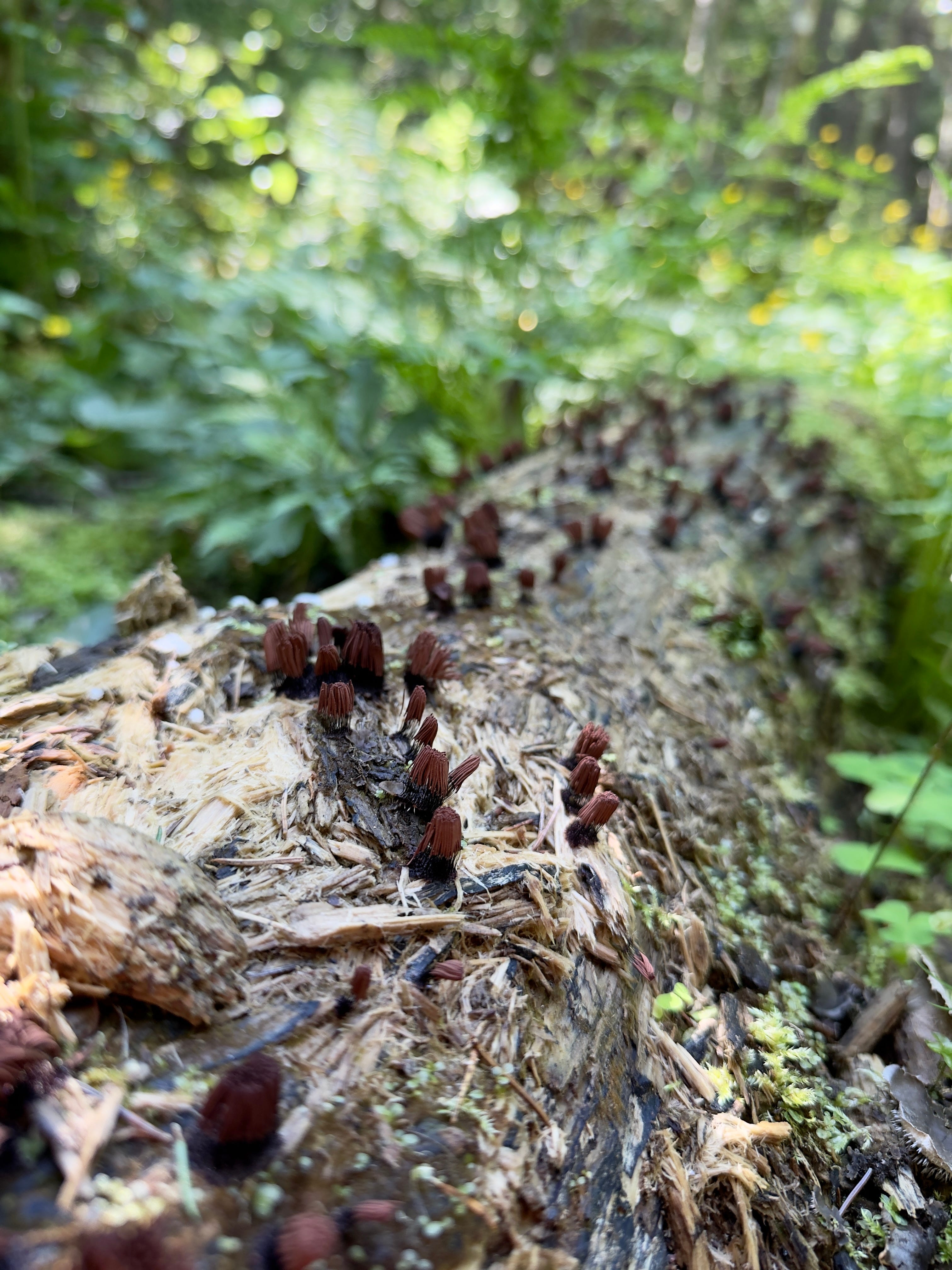
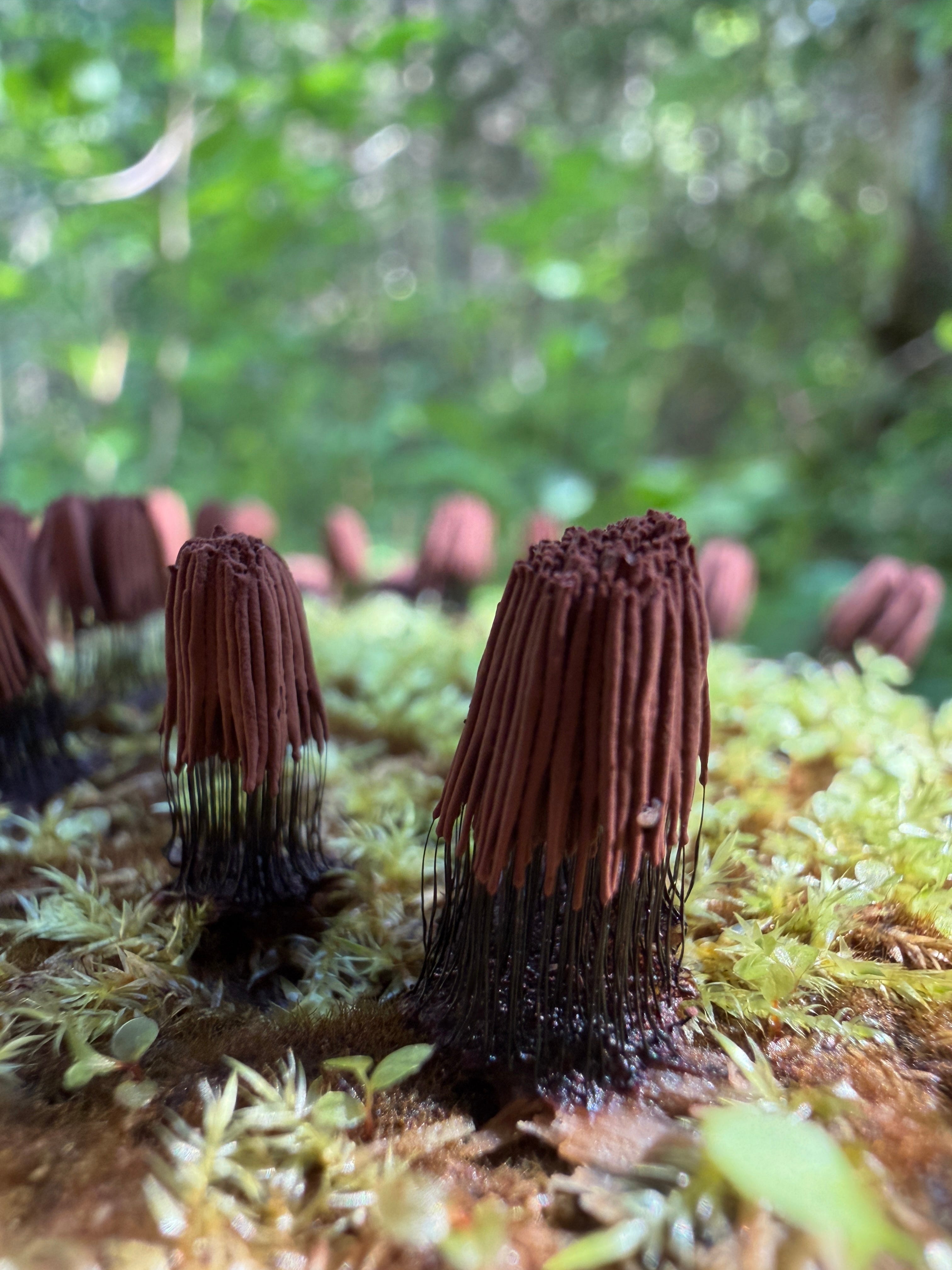
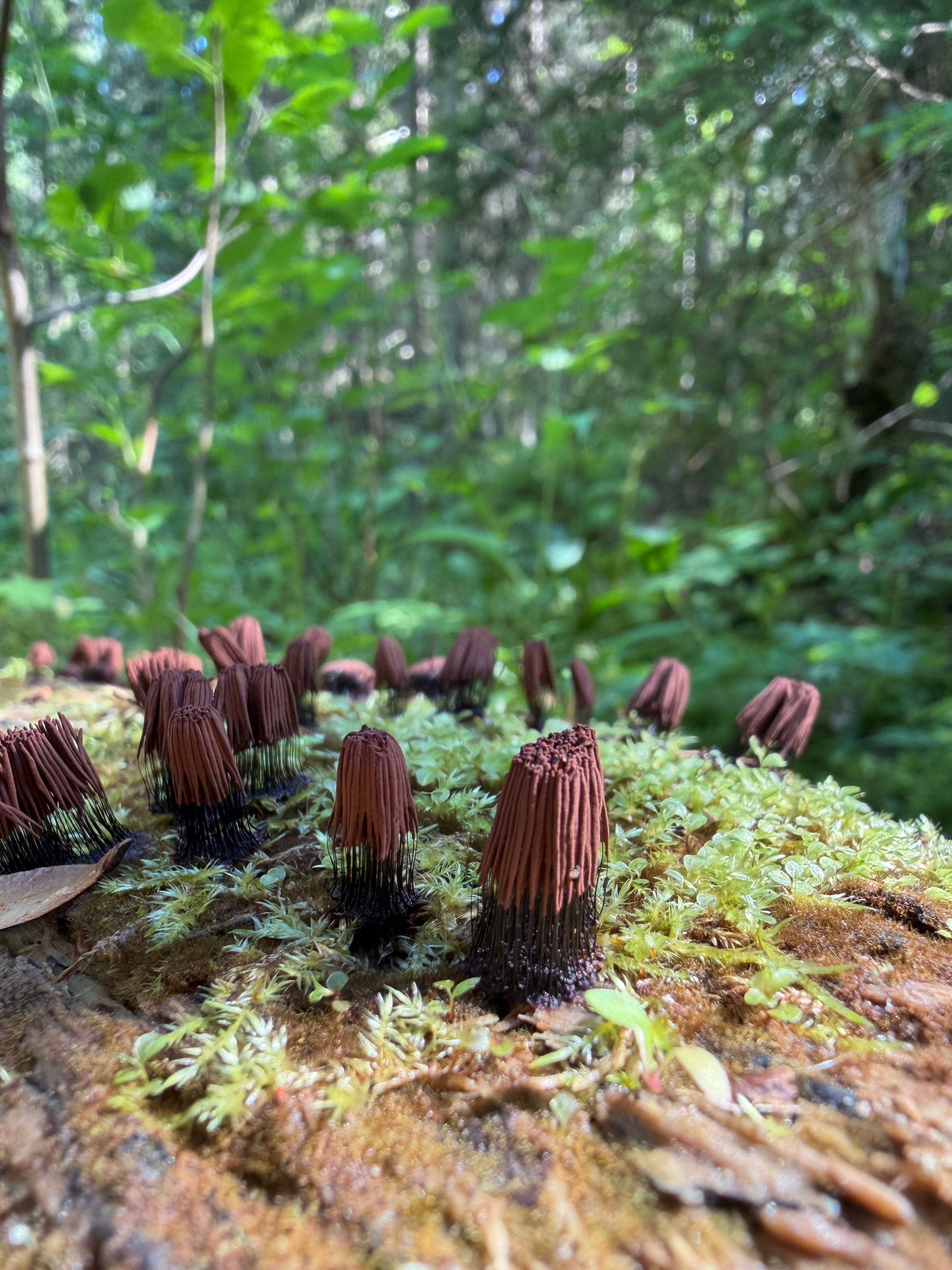
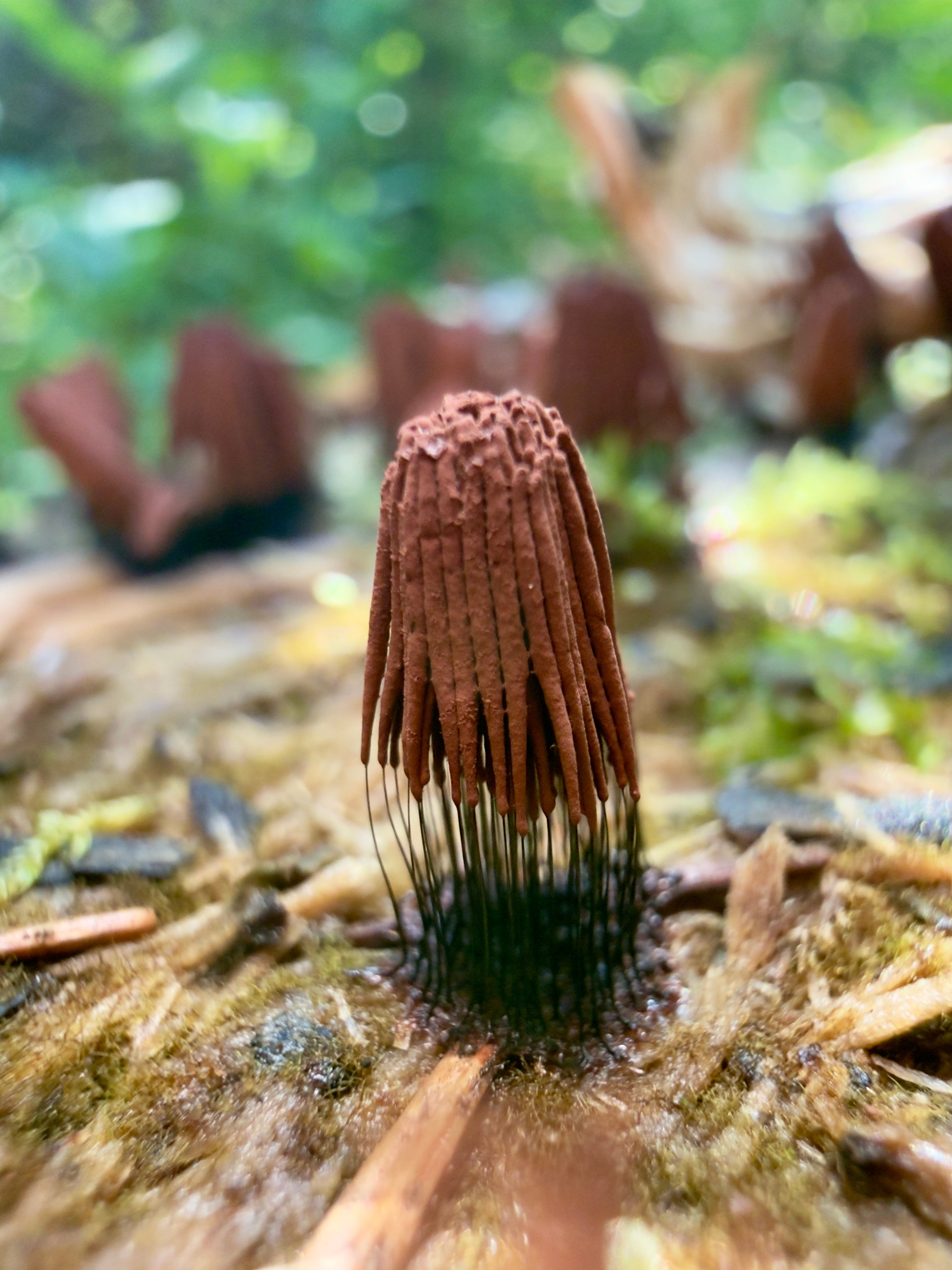
I came across the specimens shown in these photos last June. More often, though, I have only seen a few at a time. The Finnish name for this species is kanelikääminen, literally cinnamon coiling, which refers both to its colour and its shape. Cinnamon refers to the brown colour of the spores, while kääminen (literally “coiling” or “winding”) evokes an electrical coil: on decaying wood, a small tuft of thin, dark filaments.
There are several different slime moulds with names ending in -kääminen, referring to this coiled appearance (at least I think that's why they were given this name). I can’t be entirely certain of the species identification here. Apparently, identifying it with certainty would require a microscope and examining its different stages of development.

Before these brush-like tufts appeared, the organism lived as a plasmodium, a single, creeping mass. It moved slowly across decaying wood, feeding on bacteria and other microscopic food. When conditions were right, it transformed itself into these fragile sporangia. Raised above the surface, their spores are more likely to be caught by the wind and carried to another patch of damp, decaying wood.
You are reading the Wildest Treasures section — a quiet corner of the Grow Wild in Forest Soil.

🔎 Read more:
Mysterious and Fascinating Slime Moulds

All around us in nature, in decaying wood, on the forest floor and in piles of leaves, lives a quiet but fascinating little community. They are not fungi, although you might easily think so, and although they were once classified as fungi. You often walk past them without noticing. Sometimes they venture out into the open for a moment, climbing onto a s…