


All around us in nature, in decaying wood, on the forest floor and in piles of leaves, lives a quiet but fascinating little community. They are not fungi, although you might easily think so, and although they were once classified as fungi. You often walk past them without noticing. Sometimes they venture out into the open for a moment, climbing onto a stump or up a tree trunk, or wandering across the moss.
How It All Started
When my partner and I were just starting to date, we often went on walks in the forest together. That was when we started a playful competition: which of us could find more slime moulds over the summer? You could say that slime moulds glued us together. I won the competition, and ever since then, we have been spotting them together as a family.
Over the years, there have been many more little encounters with slime moulds. We kept finding them in the forest, in our garden and in all sorts of unexpected places. Each time, we used the Seek app to identify them, and the whole family marvelled at their strange appearance and wonderfully quirky names. I’ll tell you more about the origins of their names later on.
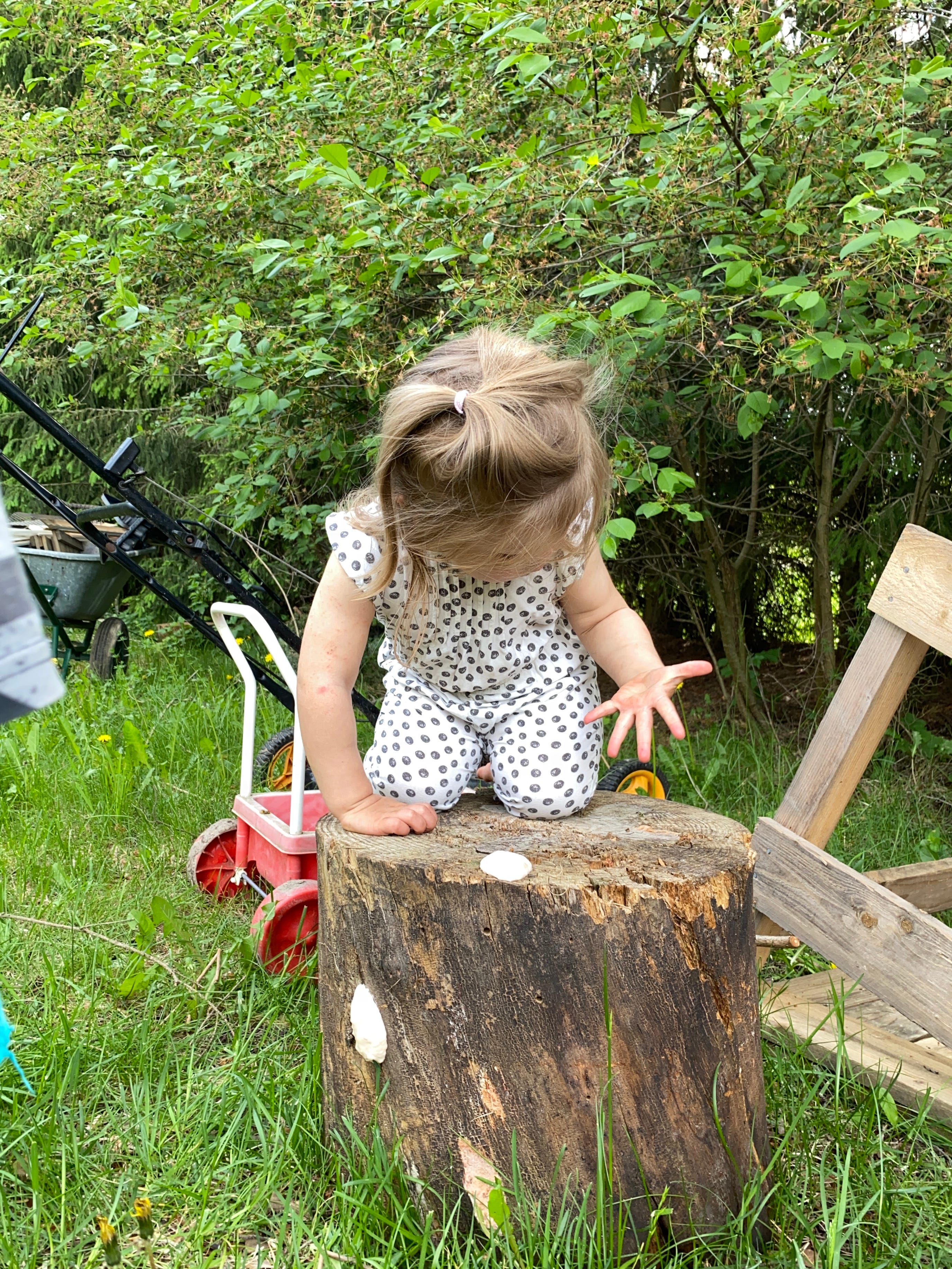
When my middle child was two years old, a slime mould called Reticularia lycoperdon, or false puffball, appeared on a log in our garden. In Finnish, slime moulds are called limasieni, but my toddler, who couldn’t yet pronounce the letter S, kept saying “timatieni”, poking the white cushion of slime with her finger and giggling. The next day, the white cushions had already disappeared, leaving behind nothing but brown powder. My toddler was astonished. Where had they gone?
English isn't my native language, so there may be some inaccuracies in the scientific terminology. I do my best!
A Strange Life Form
Slime moulds seem to break all the rules. The plasmodium eventually emerges onto the surface and transforms entirely into reproductive structures. The parent becomes its offspring. This emergence happens when conditions are moist enough to prevent it from drying out.
Unlike plants, which have protective outer layers such as cell walls, or animals, which have skin, the plasmodium has no such protective covering. It is essentially a single, continuous mass of living protoplasm, containing multiple nuclei, rather than a collection of separate cells. It contains numerous nuclei that divide as it grows, until the plasmodium becomes large enough for human eyes to see.
Slime moulds are officially classified in the same group as many amoebae, called Amoebozoa. They also have their enemies: bacteria, springtails, and beetles feed on them.
Some slime molds produce compounds with antibiotic-like effects, and certain substances have even shown activity against cancer cells in laboratory studies. There is still so much left to discover.

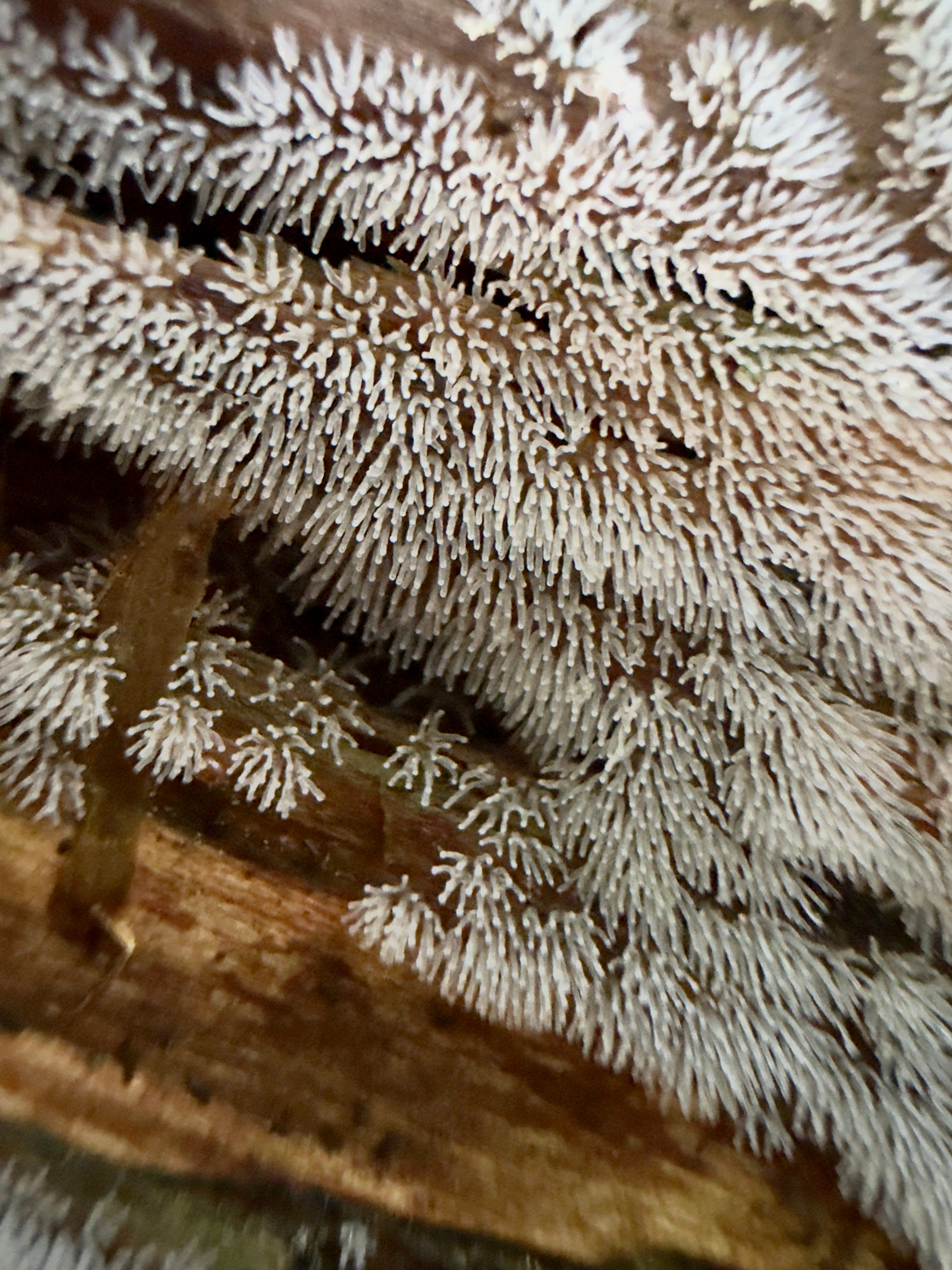
Giving Slime Moulds Finnish Names
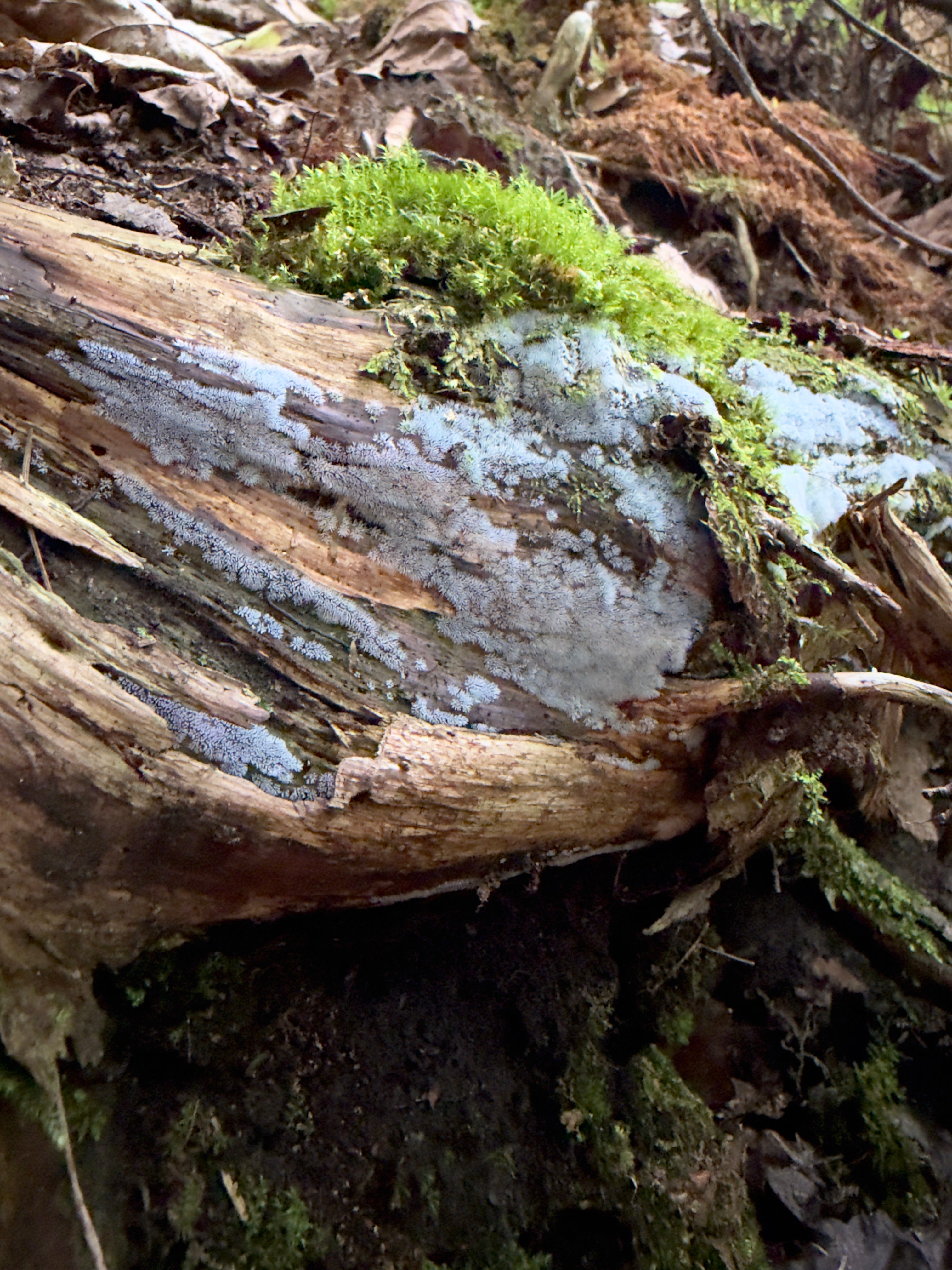
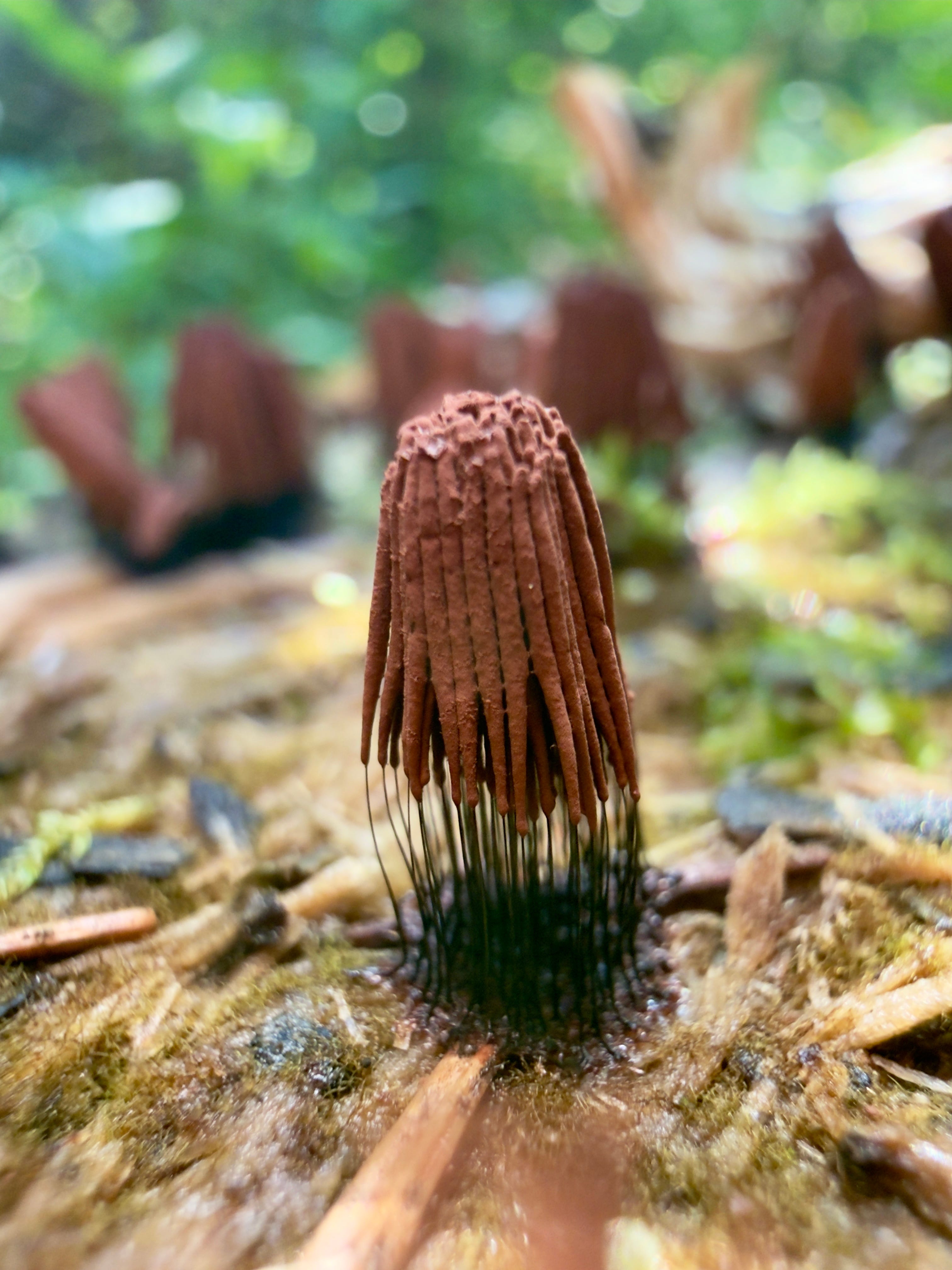
In 2011, two Finnish researchers, Marja Härkönen and Elina Sivonen, gave Finnish names to all the slime moulds found in Finland. At the time, only two slime moulds had old, traditional Finnish names. The more than 200 had no Finnish names at all. A couple of rules were aimed to be followed when naming them: every name consists of two parts and ends in -nen.

The Finnish suffix -nen can sometimes give a word a softer, cuter or more endearing feel. It doesn’t necessarily change the basic meaning of the word, but it can make it sound more affectionate or playful. It’s a little nuance that’s difficult to translate directly into English.

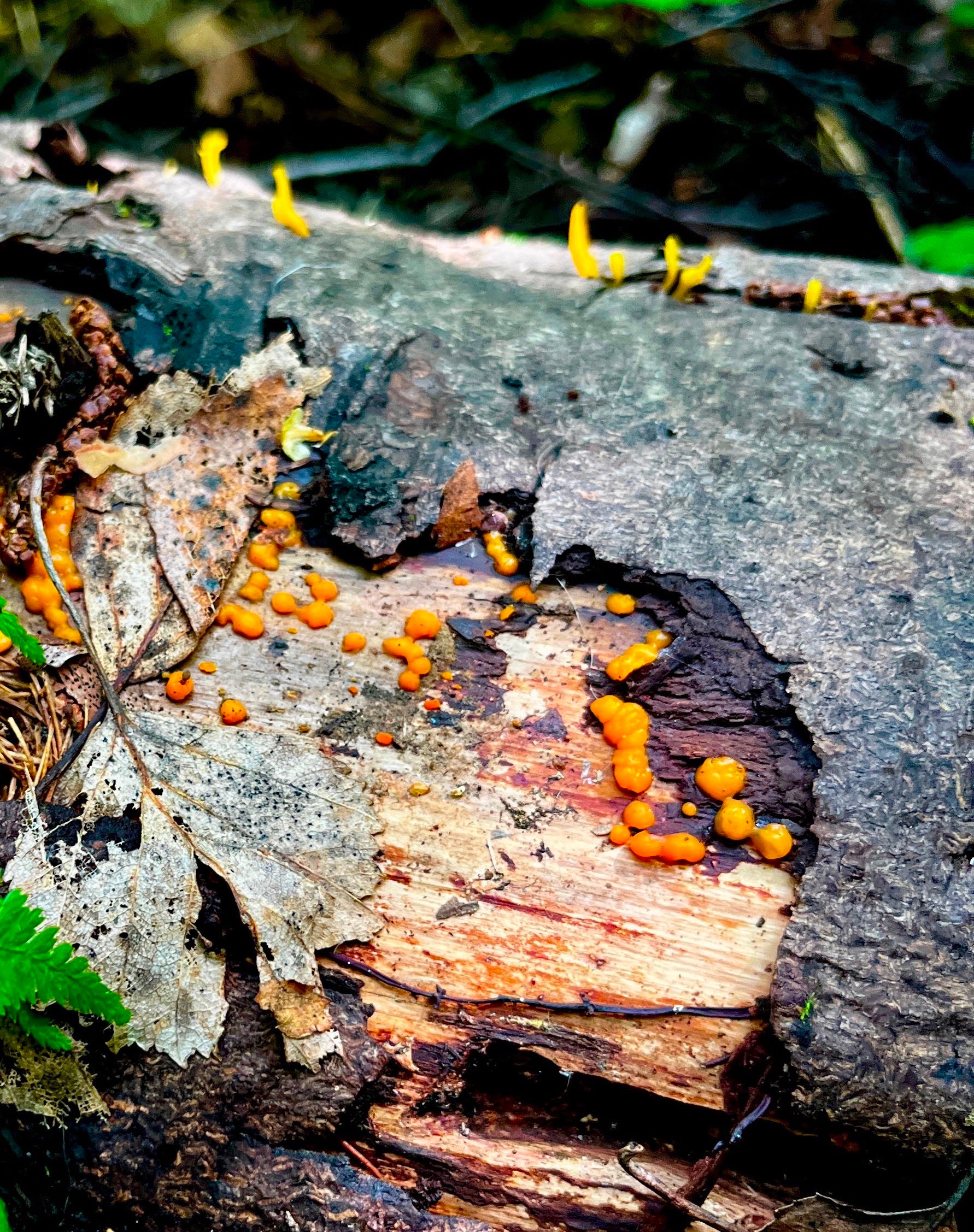
The Charm of Slime Mould Names
To Finnish ears, slime mould names sound amusing, sweet and characterful. And encountering them feels much the same. Knowing that, despite their name, they are neither fungi, plants nor animals makes them seem mysterious.
Yet they move along the forest floor as if they were perfectly conscious creatures. And perhaps they are. Perhaps they are flowing away in terror at full speed when I crouch down to marvel at them. It’s just that, to the human eye, they move far too slowly for their speed to be visible.
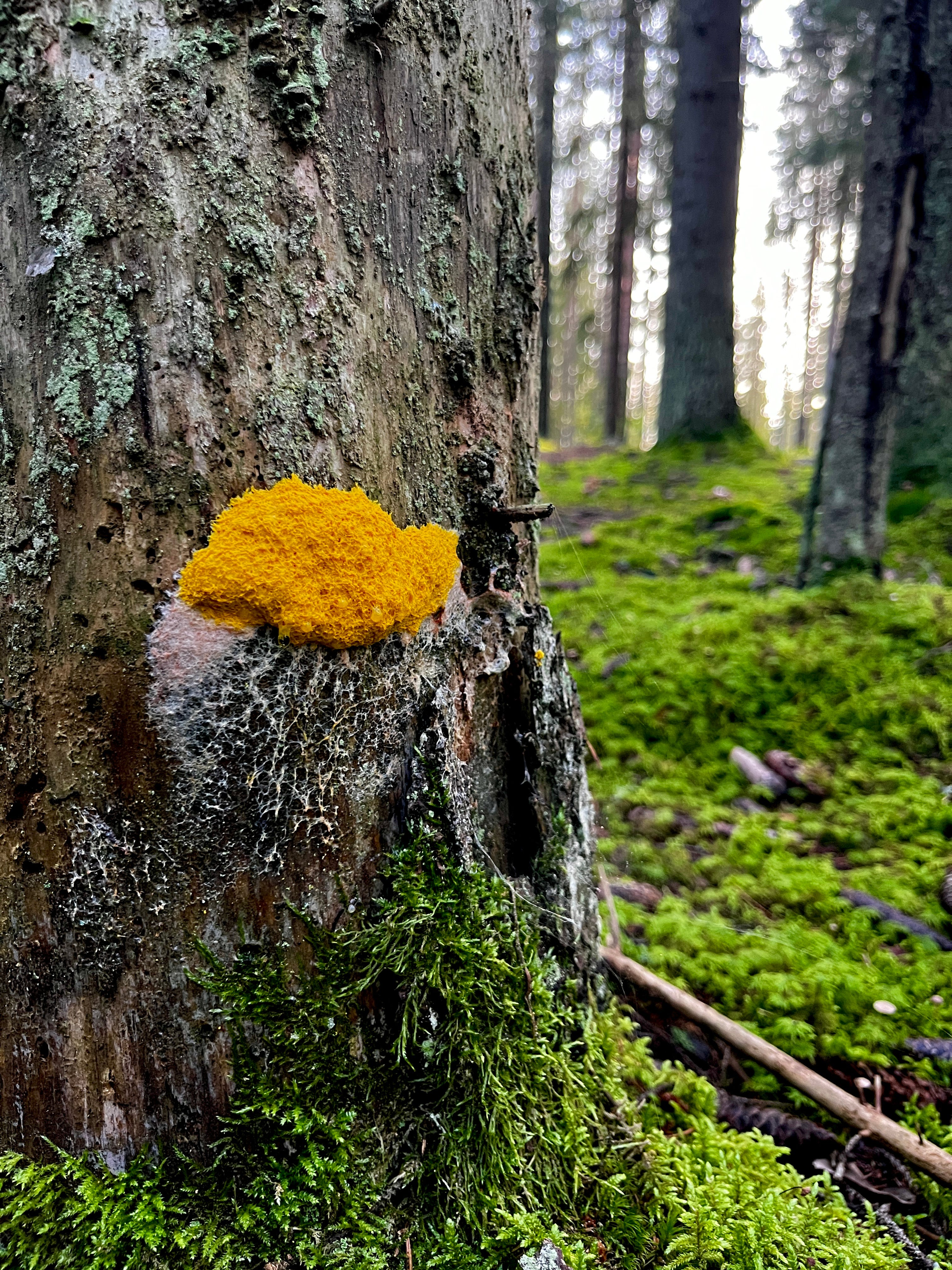
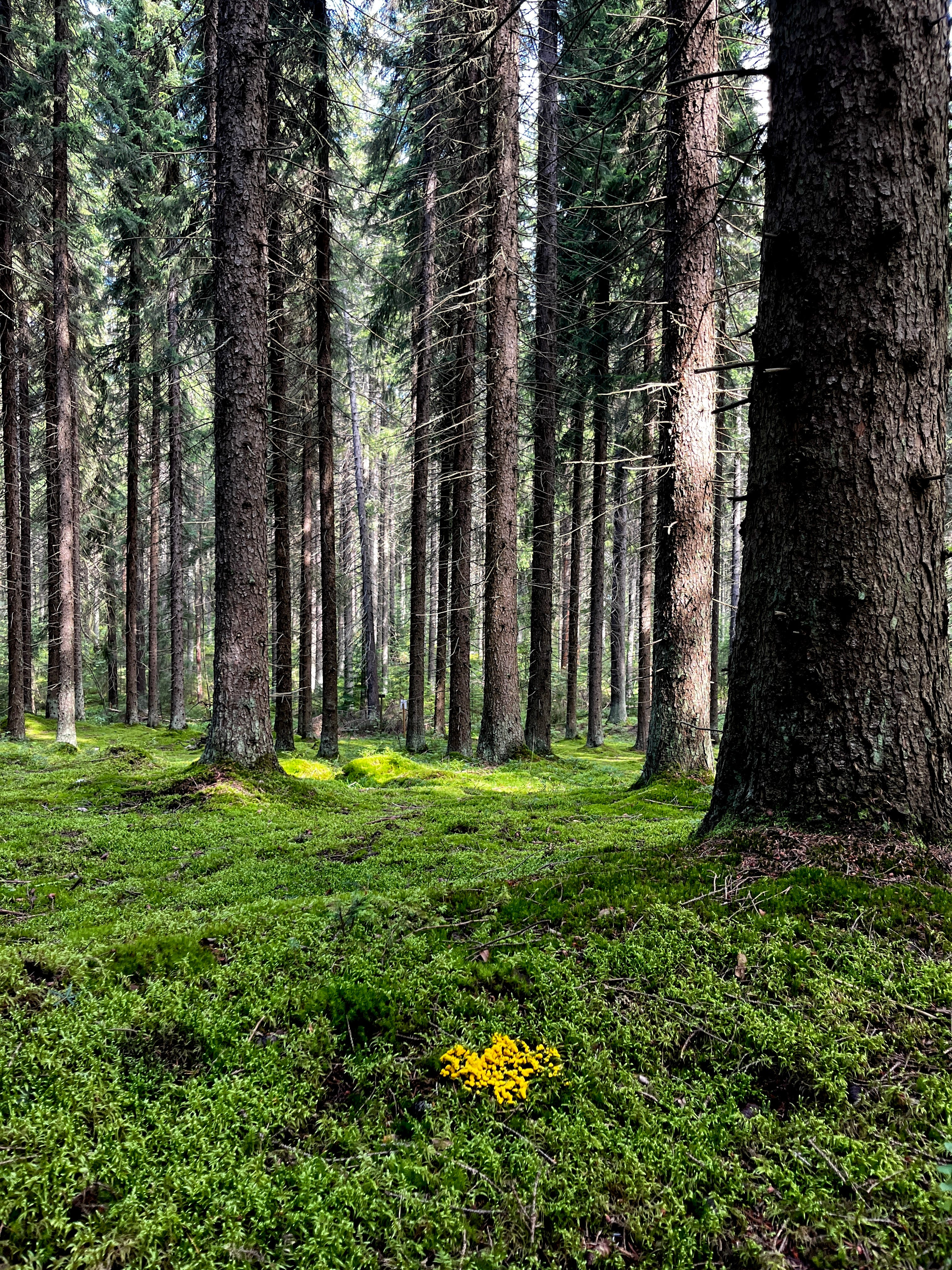
More than a year ago, I gave a slime mould a little role in my story about the Enchanted Forest. I described it as a funny, almost magical little creature, spilling over the moss like molten gold.
“Only messy thing seen is this scrambled-egg slime (Finn. paranvoi, Fuligo septica), as if the forest itself had spilled a bit of magic here. Looks like it’s spilling over the moss like molten gold, shifting slowly as if it has a life of its own. You roll your eyes and let out an involuntary laugh. What a funny place!”

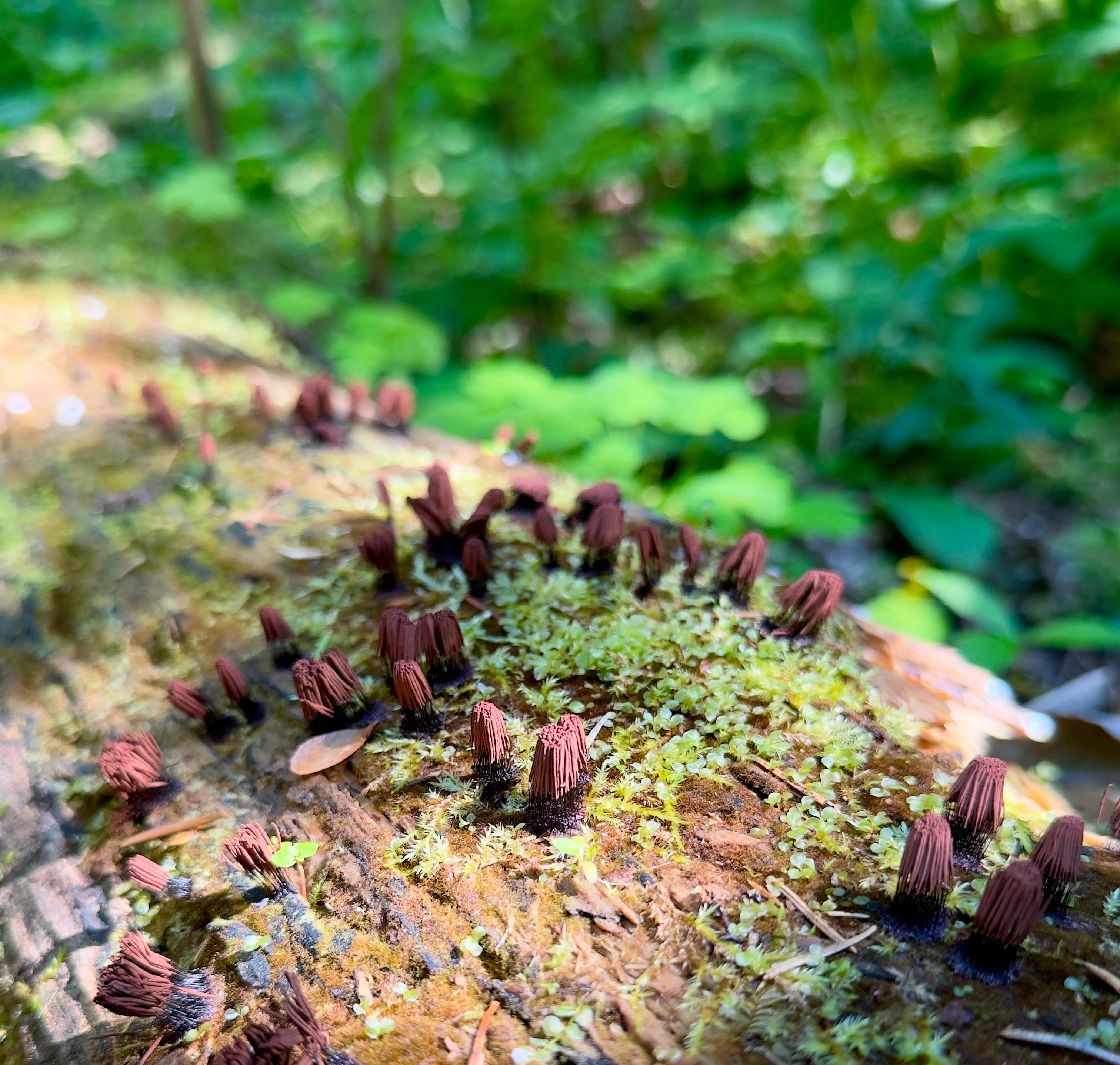
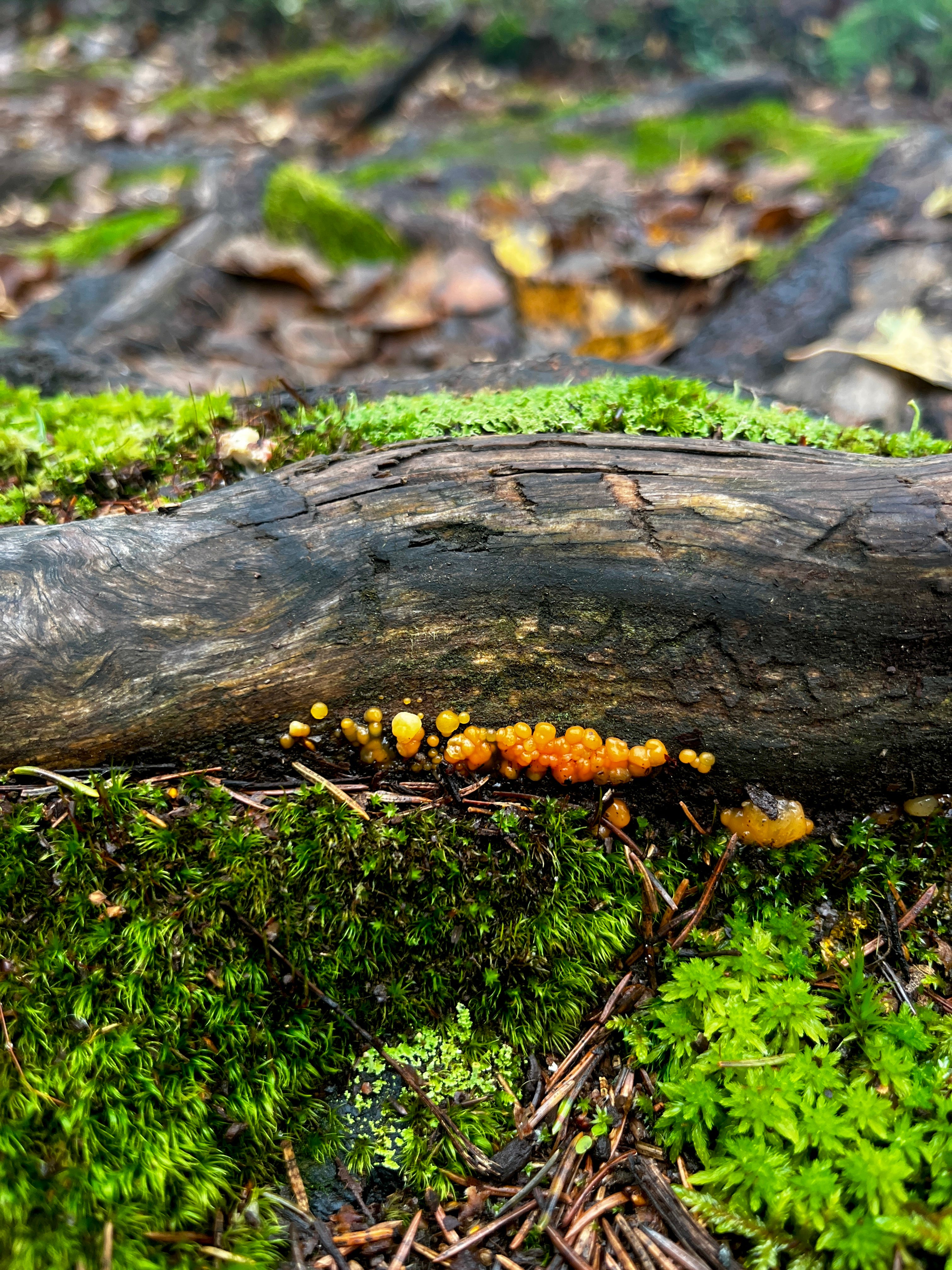
How Slime Moulds Move and Live
Slime moulds have no senses, yet they can navigate towards food, oxygen and warmth. When one branch discovers something interesting, the news spreads through the veins of the plasmodium, and soon the whole thing starts moving towards the discovery.
They can also avoid harmful substances.
It can pass through porous materials, such as decaying wood, by splitting into smaller units and then joining back together again.
One side of a slime mould can move in a different direction from the other, eventually causing it to split in two. When the two parts meet again, they fuse back together. So they really do move, which is absolutely fascinating and almost impossible to comprehend!
To spread their spores as far as possible, they climb to elevated places. If the spores land somewhere moist, they germinate. They then release a flagellated swarm cell with two flagella, which begins to swim. If the environment dries out, however, the flagella are withdrawn and the cell becomes a crawling amoeba. If there is no moisture available at all, the slime mould can remain dormant for decades. When moisture returns, it can become active again very quickly, sometimes within just a few hours. As the amount of protoplasm grows, it eventually becomes visible to the naked eye.
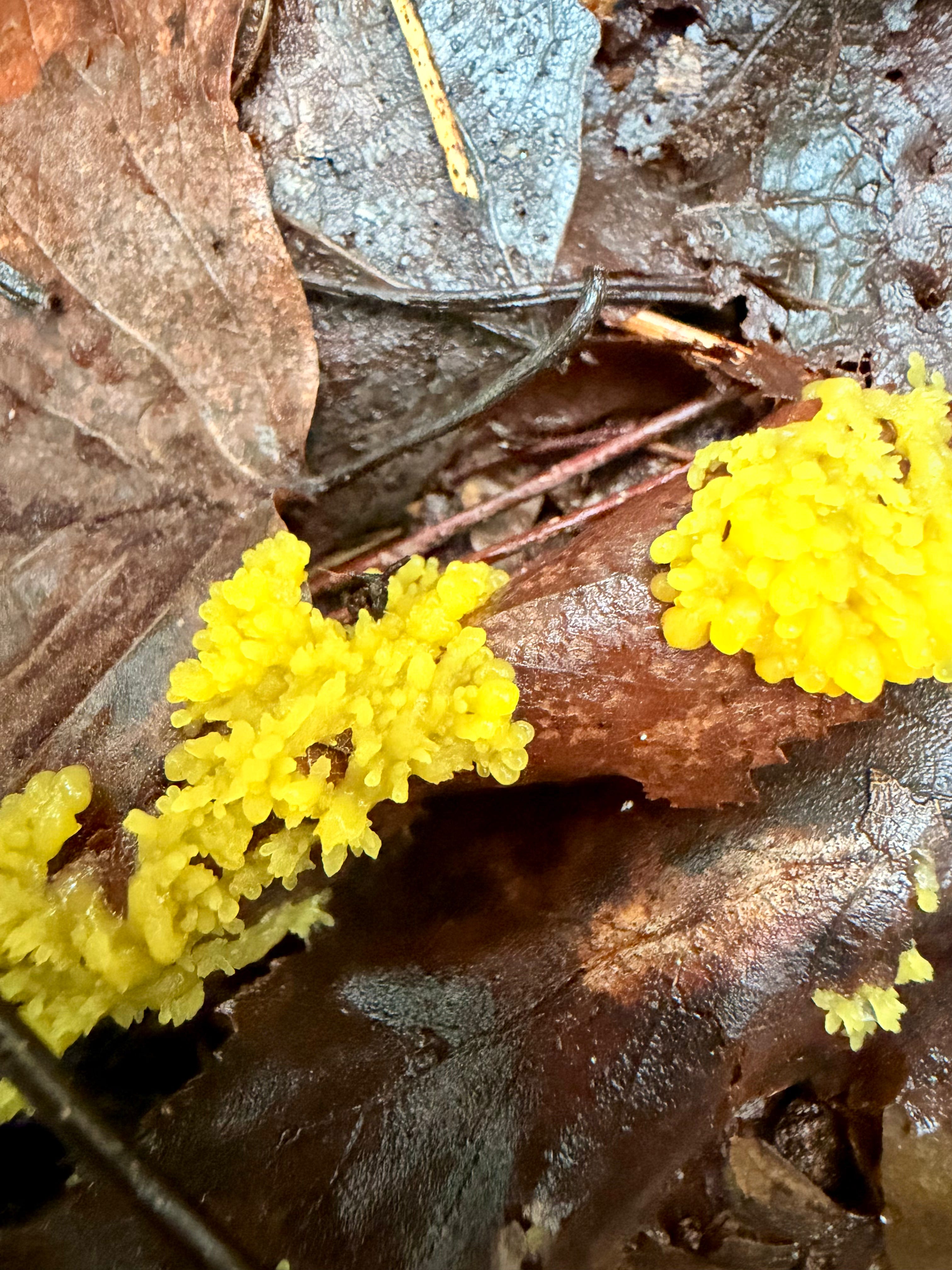
The Two Traditional Finnish Names
Two slime moulds were so common in Finland that they had acquired names long ago.
Fuligo septica is known by the English common names scrambled egg slime and dog vomit slime. In Finnish, it is called paranvoi, which comes from the words para and voi (butter). A para was a kind of supernatural familiar spirit, which, according to folklore, could be created or summoned to help a witch. Paranvoi was therefore thought to be butter dropped onto the forest floor by this spirit.
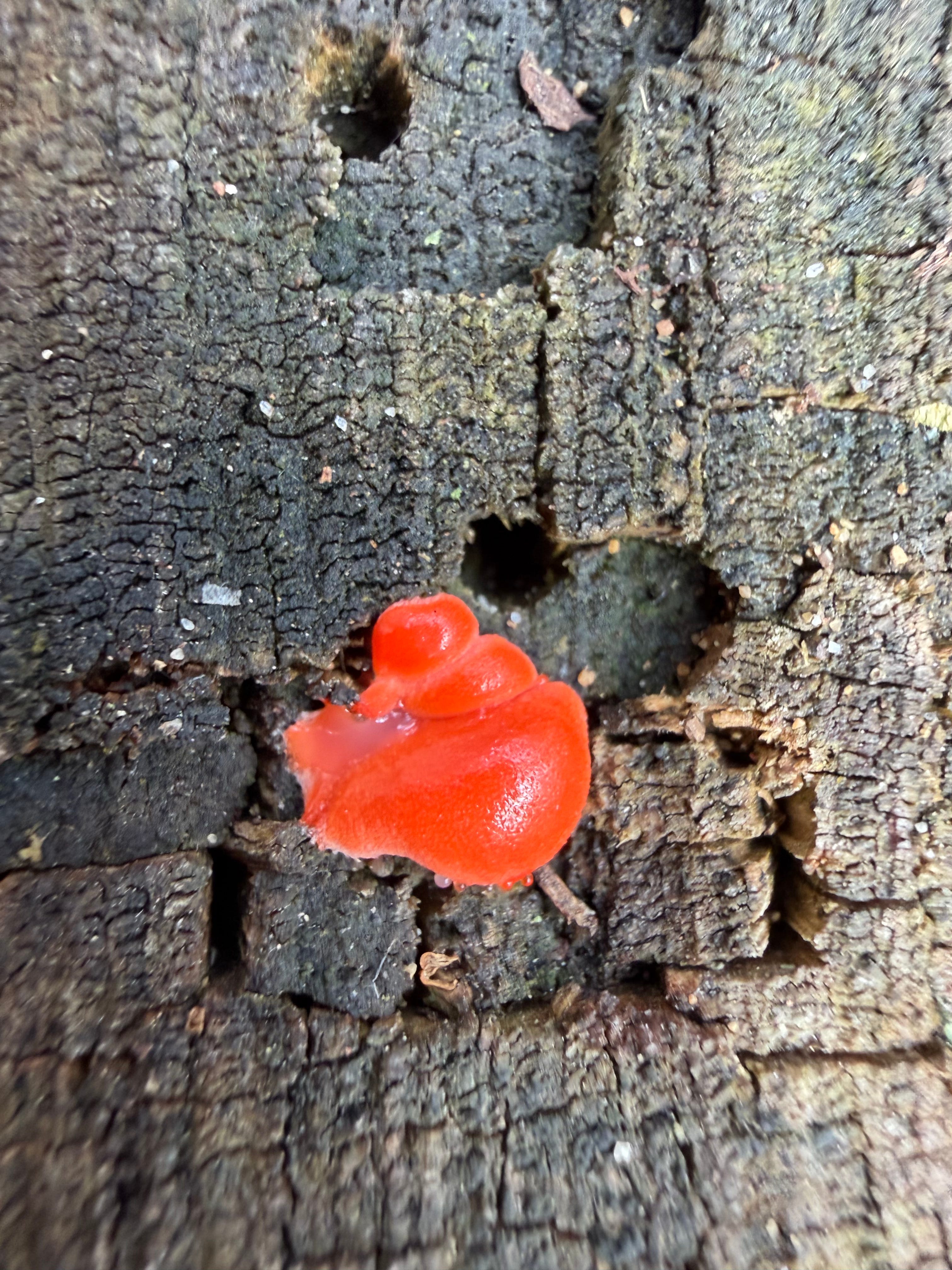
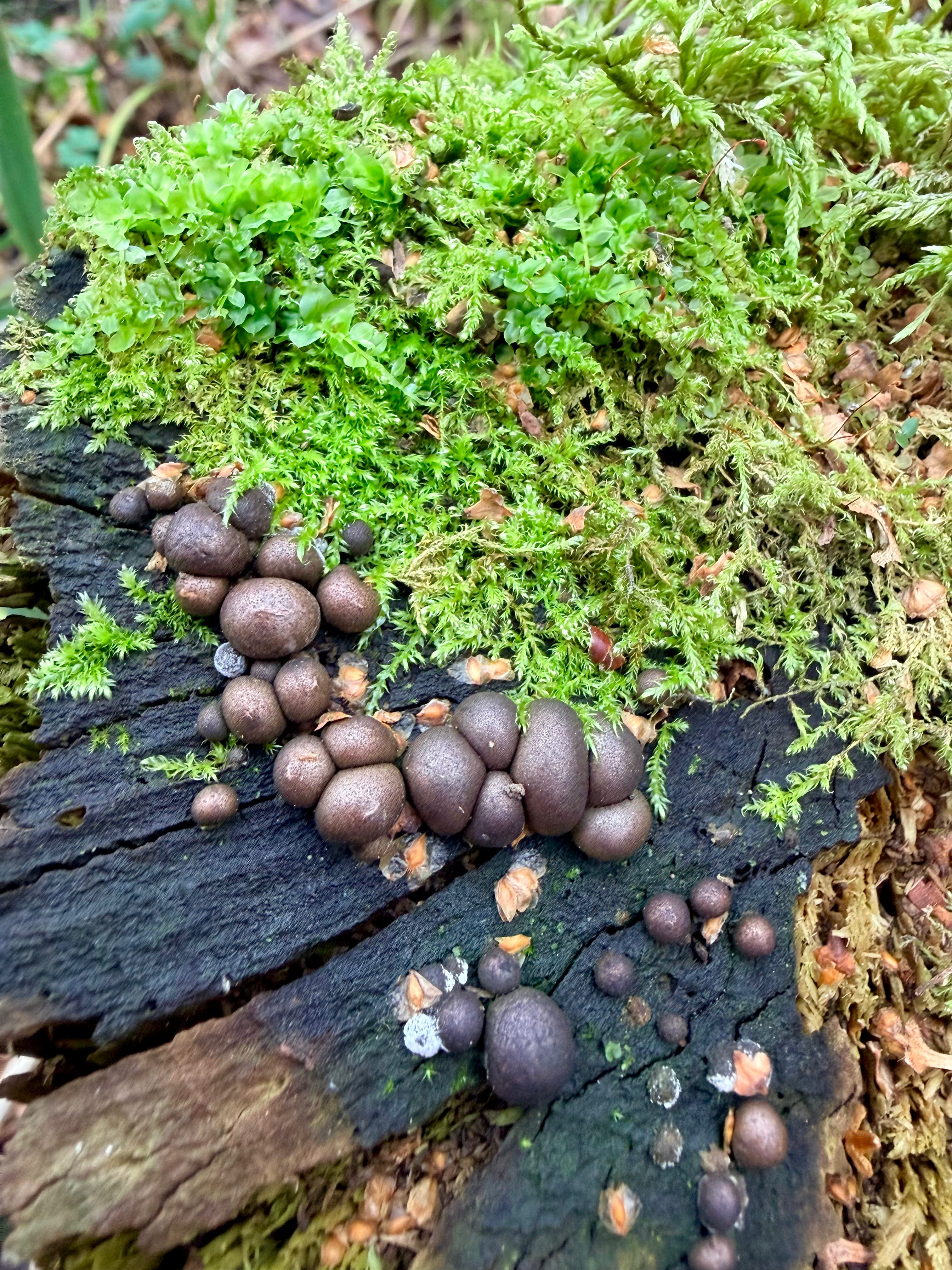
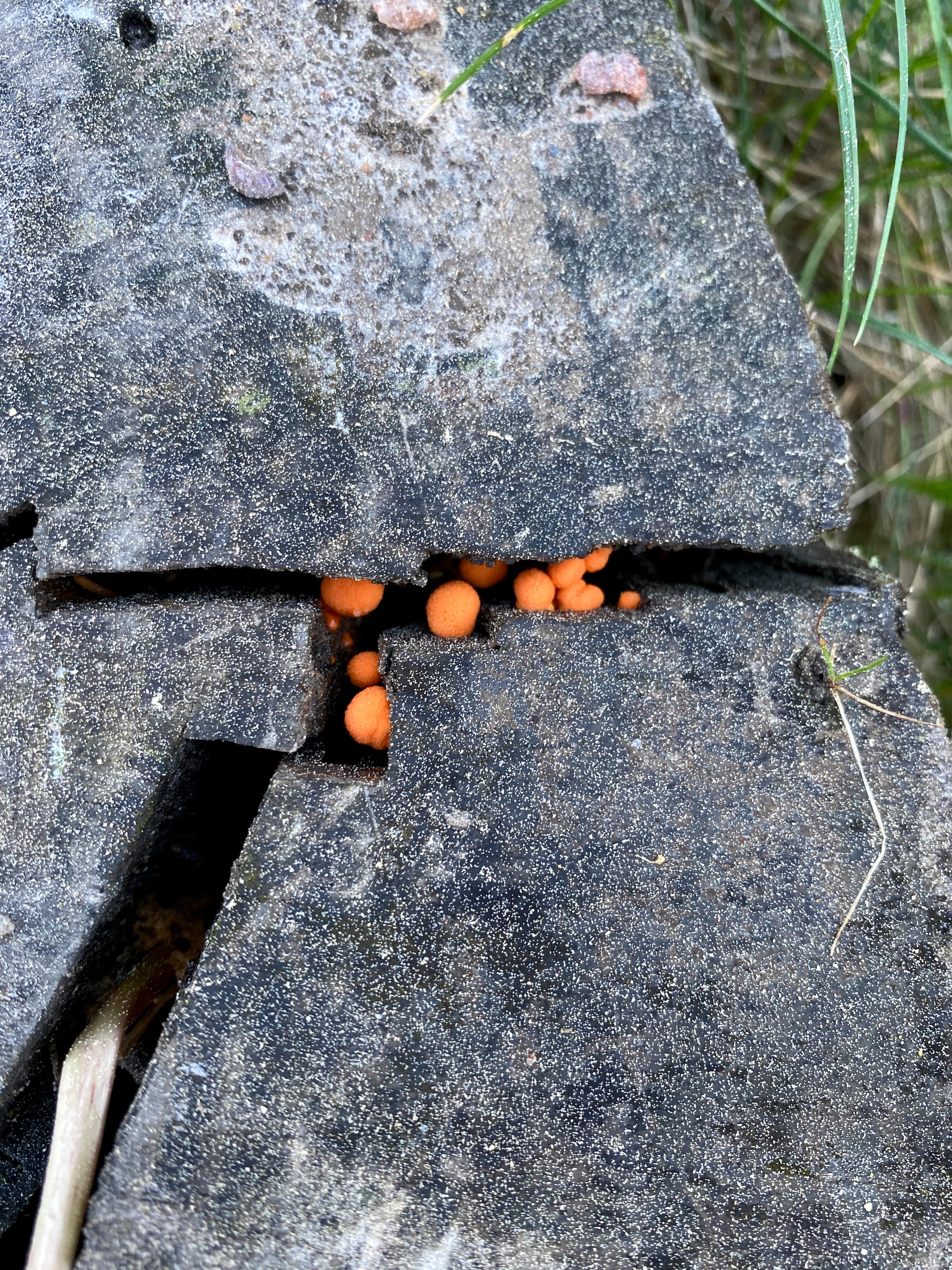
Lycogala epidendrum is called wolf’s milk in both English and Finnish (sudenmaito). The Latin name Lycogala also comes from the words for wolf and milk. When fresh, it is pale pink, turning brown as it ages. It has a round, blob-like shape, and I can easily imagine that the name originates from the idea that the milk of the feared wolves contained a little blood.

Sources:
Metsän salainen elämä (The Secret Life of the Forest), Gaudeamus, 2016.
Limasienet (Slime Moulds), Marja Härkönen and Elina Sivonen, 2011.
So interesting, thank you!
Fascinating, you’ve found so many!