


I was inspired to write this post after sharing the Finnish word kelo for a weathered dead pine and receiving this lovely comment:

As you know, Finnish is my native language. When I write in English, I use an English dictionary and Grammarly to help me with the language and Wikipedia to help me, for example, when I’m looking for the English name of a plant or a mushroom. But there is one difficulty with writing in English that a dictionary cannot solve. There simply isn’t an equivalent word for everything.
Some Finnish words describe things in nature so specifically that explaining them in English takes a whole sentence. And sometimes, even that doesn’t quite capture what the word means to us. The Finnish language itself tells a story of people who have lived in forests and bogs and travelled across lakes and open waters. Our vocabulary is rich with words for the natural world.
So, let’s take a closer look at some Finnish words for things in nature that don’t have a direct English equivalent. I’ve also recorded myself saying each word, so you can hear what the words sound like.
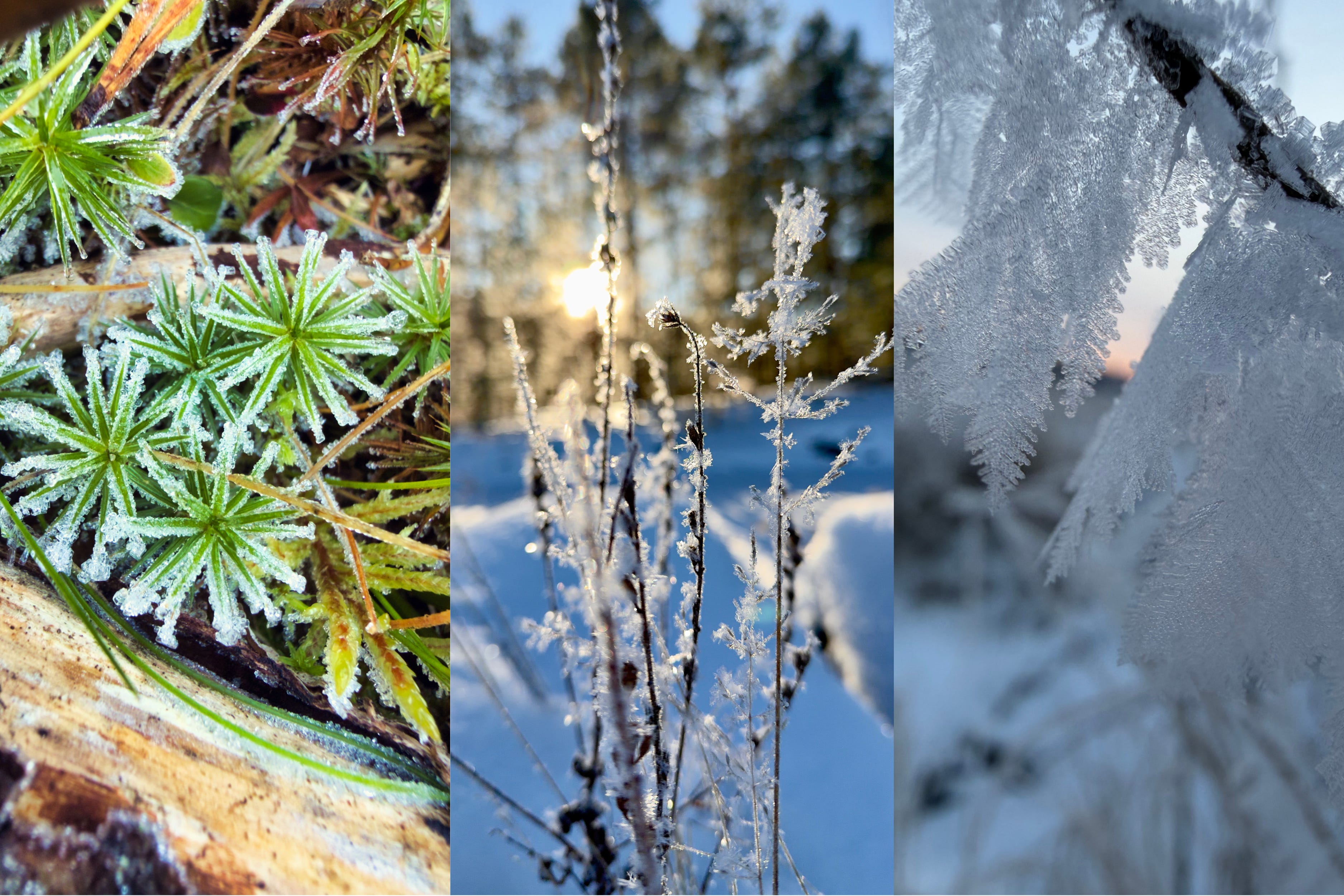
halla
Halla refers to air temperatures dropping below 0°C during the growing season. Here, night frosts have always been a concern because they can destroy grain crops. This is one reason why the word halla has long been part of our vocabulary.
kuura
Kuura is a white coating of tiny ice crystals that forms on the surfaces of objects in freezing weather. Apparently, hoar frost is the closest equivalent, but kuura is such a beautiful, simple word.
viima
Viima means a cold, steady wind that cuts through you. I hear it as a very beautiful and fresh-sounding word.
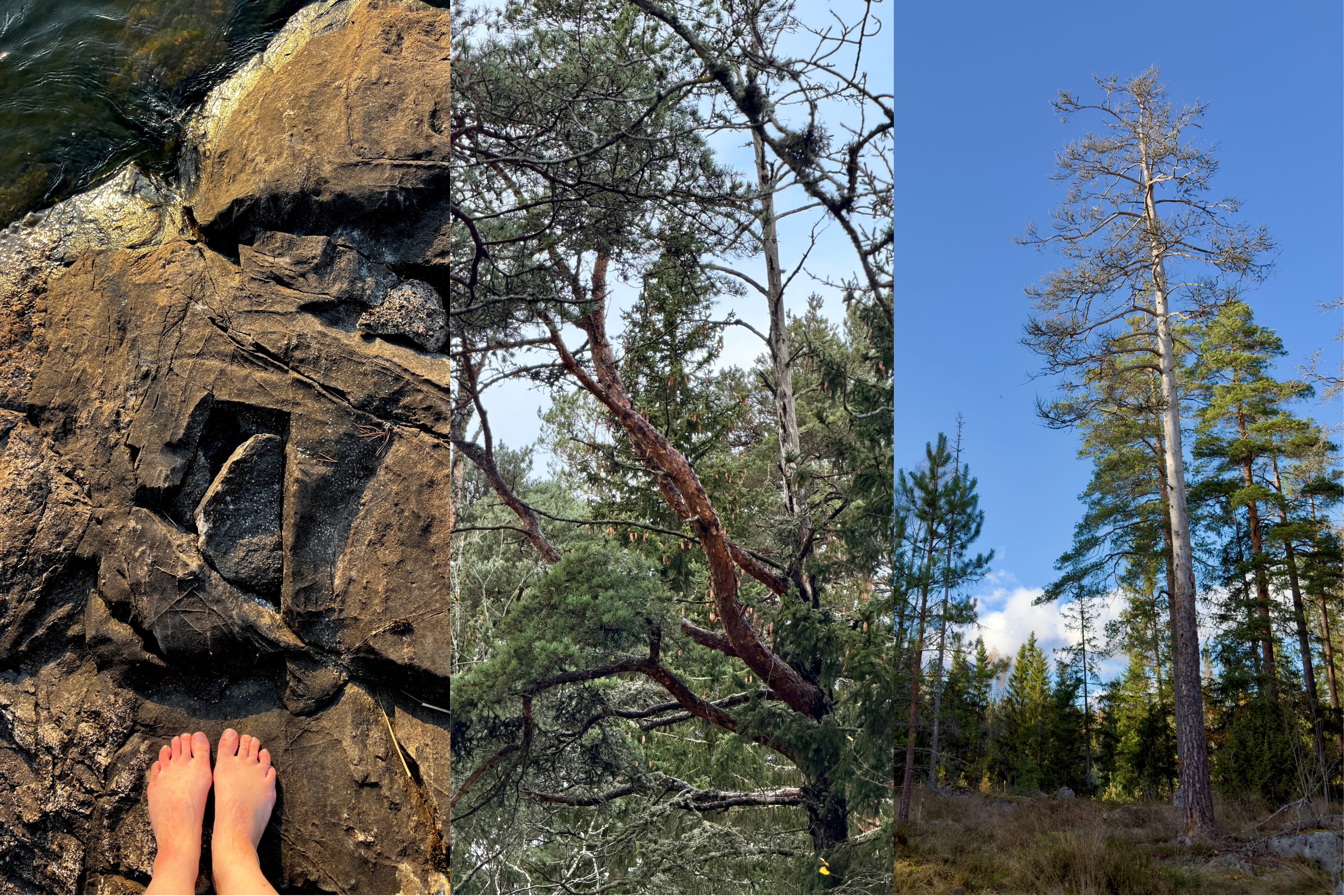
kallio
Rock, but in Finnish, it refers to a continuous expanse of exposed bedrock, not an individual rock or boulder. Translating this word often gives me a headache. If I write in Finnish, “I sat down on the kallio by the shore,” it’s clear that I mean a solid mass of rock rising from the water, possibly with a smooth surface. But in English, it could also be understood as sitting on a large individual rock that happens to be by the shore.
aihki
Aihki means a very old, large pine tree that has stopped growing, with a rounded crown and thick, plated bark.
kelo
Kelo means a weathered dead pine in Finnish. A kelo pine can stand for up to 700 years.
𖠰 Overall, pine has several different names in Finnish, such as mänty, petäjä and honka. The pine has long been an important tree in Finland, both as a source of food during times of scarcity and as a building material. Traditional log houses were often built from pine logs, stacked one on top of another.
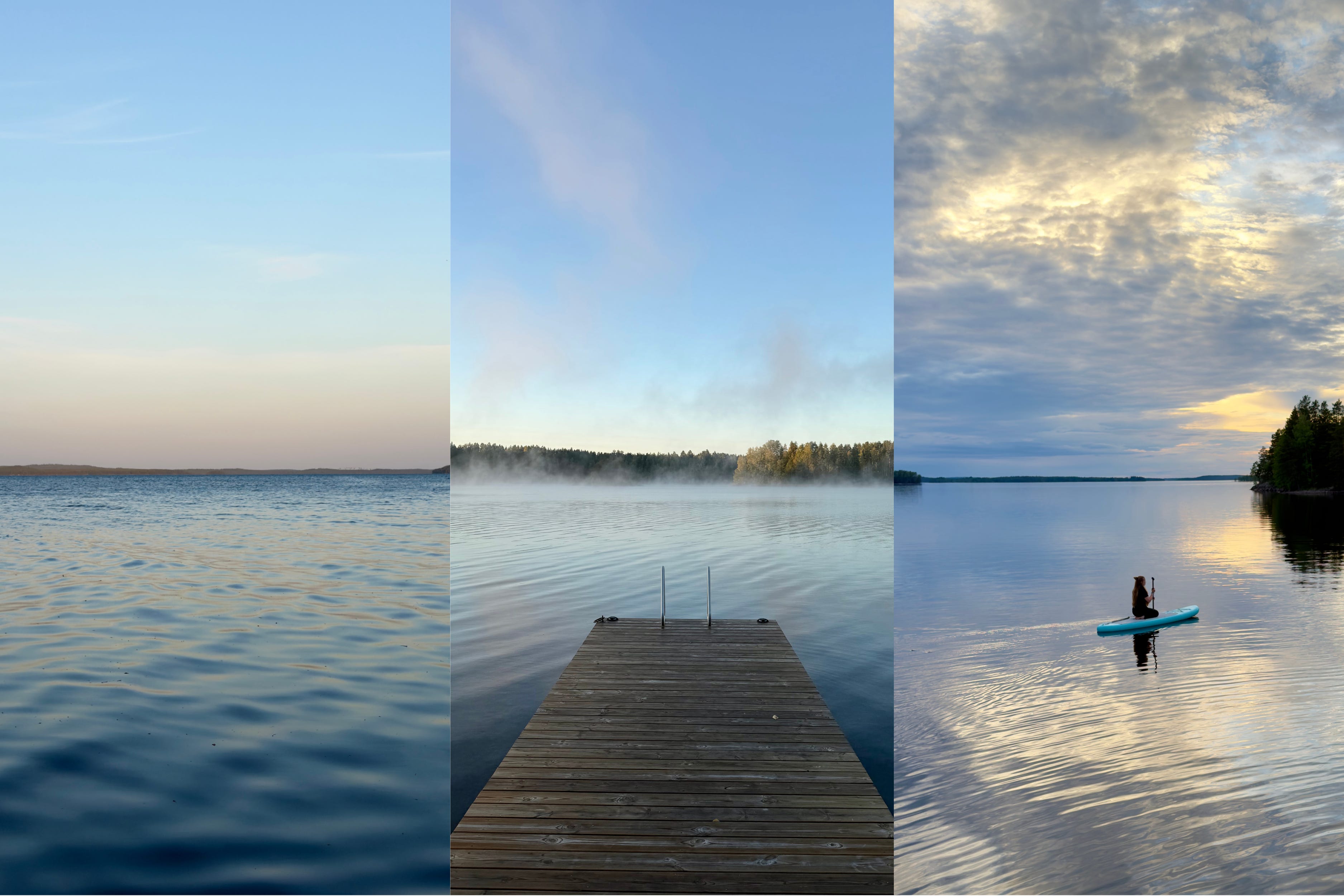
Finnish also has a rich vocabulary for water and the places where land meets it. Some of these words carry associations that go beyond what they describe.
laine
Laine is a small, gentle wave. The word can also be turned into the verb lainehtia, describing the way the water moves in soft, rolling waves. It carries a certain atmosphere, bringing to mind birdsong, the scent of the sea, and beautiful weather.
laituri
Laituri is a structure built out over the water, where you can moor a boat, get into a boat, or go swimming. It is usually made of wood, and can also float on the water or be fixed in place. I still can’t quite decide which word would best describe our wooden laituri. Dock feels too focused on boating, pier sounds too French, and jetty sounds too grand. In Finnish, there is just one word for it, a very ordinary word that brings to mind cottage life, boating, and swimming.
aava
Aava is an open, spacious, wide, vast, expansive, stretching as far as the eye can see, shoreless. The word can be used to describe, for example, a large, open body of water or a treeless bog. To me, it’s a really beautiful word.
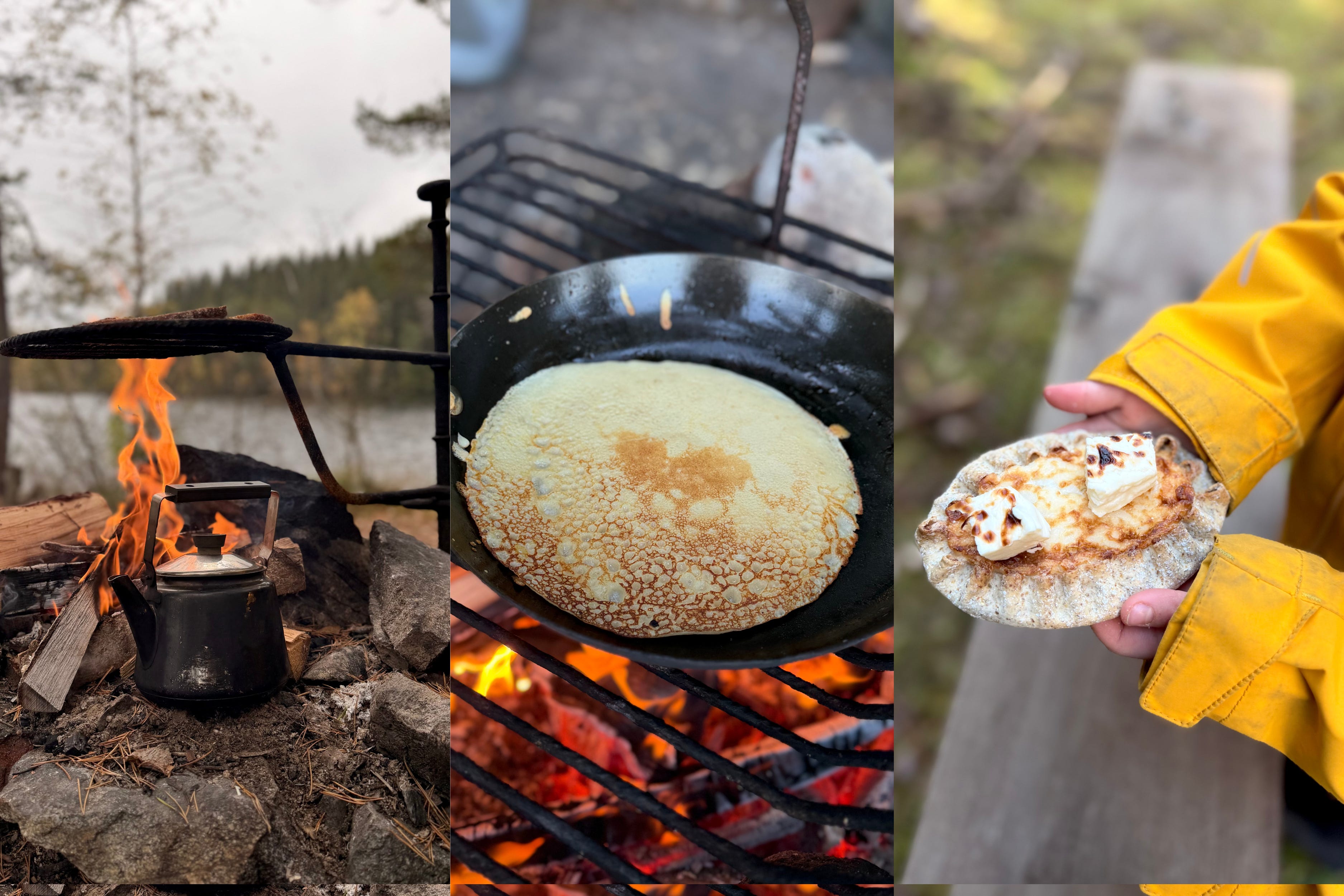
There are also words for spending time in nature that are difficult to translate directly. They describe not only what we do, but also the things we associate with being outdoors.
retki
Retki means a short trip, an outing, or a hike. There might be snacks and an overnight stay, or neither. It brings to mind spending time outdoors in nature, without implying any particular pace or distance. This can also be turned into the verb retkeillä. I often find it difficult to choose between the words hike and outing when describing my time outdoors. To my ears, hike sounds like a brisk walk or a trek.
eväs
Eväs can be translated as snack, but it doesn’t imply casual snacking. The word snack bothers me a little because it brings to mind nibbling and crunchy things. Eväs doesn’t refer to any particular type of food. It is a word specifically for food and drinks brought along on an outing and is usually associated to healthy food.
The words retki and eväs can also be combined to form eväsretki, which means an outing where you bring food and drinks along.

You can form compound words for almost anything. For example: hallayö (frost night), aamunkajo (morning glow), sienimetsä (mushroom forest), rantakallio (shore rock), järvimaisema (lake scenery), suolampi (bog pond), kuurankukka (hoar frost flower), tähtitaivas (starry sky), aamukaste (morning dew),
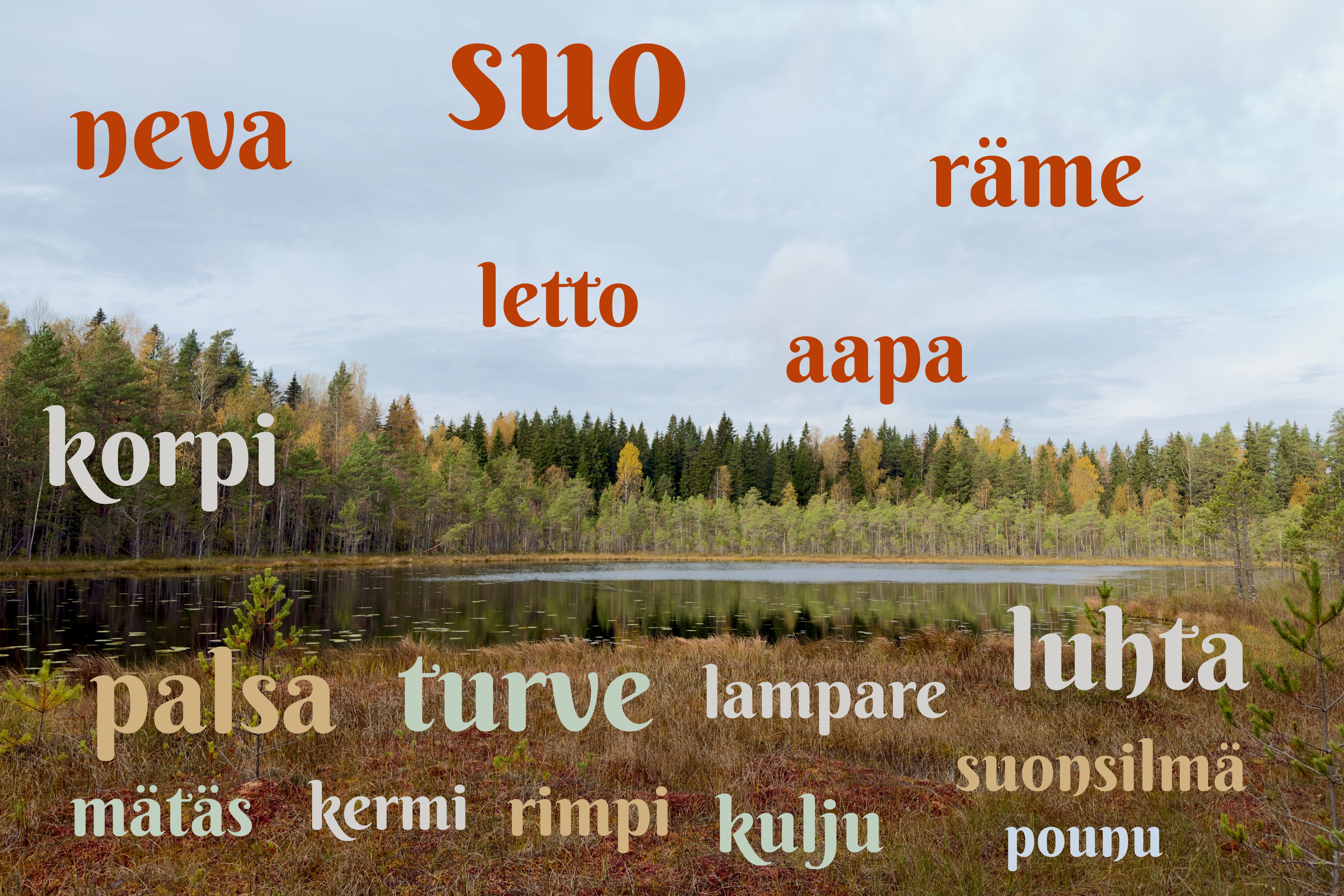
And then there are the words for different types of wetlands/bogs, of which Finnish has a great many. Originally, a third of Finland’s land area was covered by bogs, so they played a huge role in the everyday lives of people in the past. I rarely find direct English equivalents for these words, and I’m often left a little unsure whether I’ve chosen the right one.
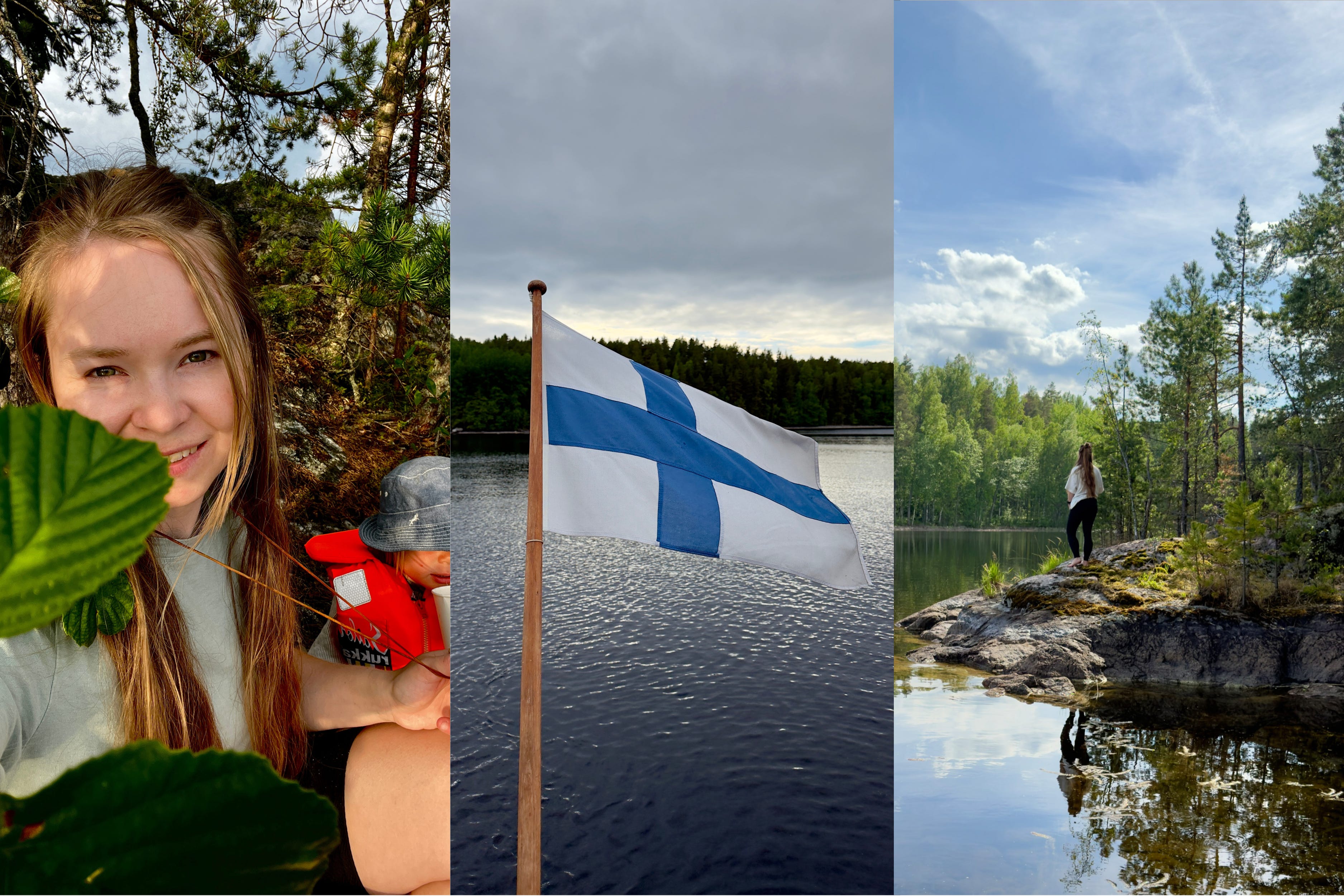
In Finnish, you can play with words, combine them, and bend them to your liking. I also like how low-key Finnish is. We don’t capitalize words like english, finnish, labrador tea, ice age or karelian pasty. Even in writing, Finnish feels a little less loud. There’s something understated about Finnish, a language full of beautiful meanings and words that reflect the way we experience nature.

I love this. Reminds of the common claim that esquimos have dozens of words for different kinds of snow. Not sure how true that actually is.